
Bentley Continental GT Common Problems and Repair Costs
The five Bentley Continental GT common problems owners report most, with symptoms, typical mileage and the repair. Short answers: overheating and brake faults can't wait, air suspension is the biggest budget item, and a later second-generation V8 S is the safest used buy.
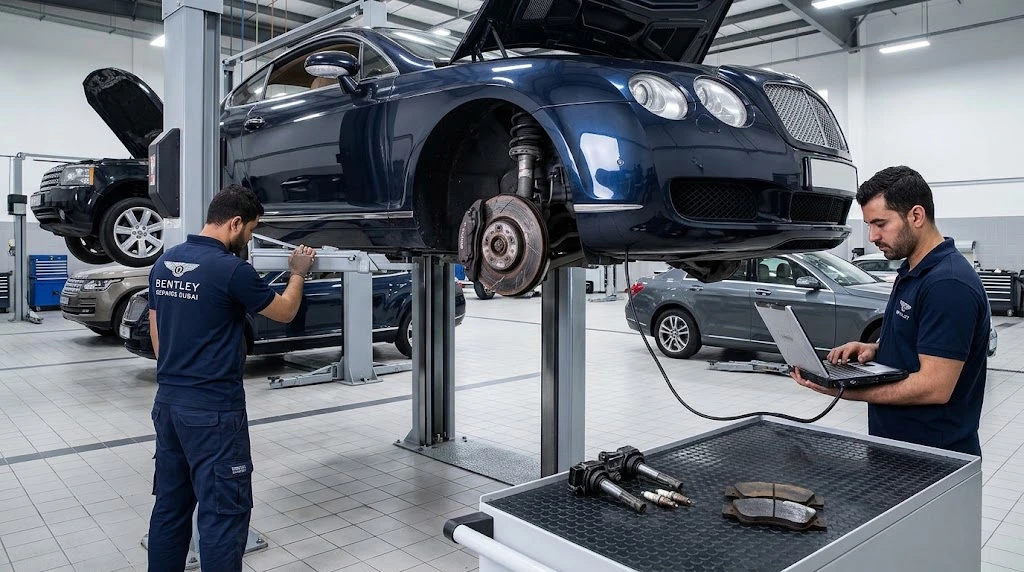
Continental GT and GTC, 2003–2024, W12 and V8
Car sitting low after parking, or a suspension warning
Overheating and brake faults: stop now. Others: book within days
Genuine, quality aftermarket or remanufactured, inspected used
The five Continental GT faults owners report most
Ranked from UK and US owner forums, parts-specialist guides and UAE motoring press, not from a count of our own jobs. These are ageing faults, mainly on first-generation (2003–2011) and second-generation (2011–2018) cars. Most common first:
- Air suspension leaks and compressor wear
- Cooling system leaks: radiator, plastic fittings, hoses, water pump
- Ignition coil failure and misfires
- Brake wear, sticking rear calipers and parking-brake faults
- Battery drain and low-voltage electrical faults
Owners describe the same signs again and again: a car sat down on one corner, a sweet coolant smell, a lumpy idle, and a dash full of warnings after standing.
Continental GT problems: symptoms, mileage and the fix
1. Air suspension problems
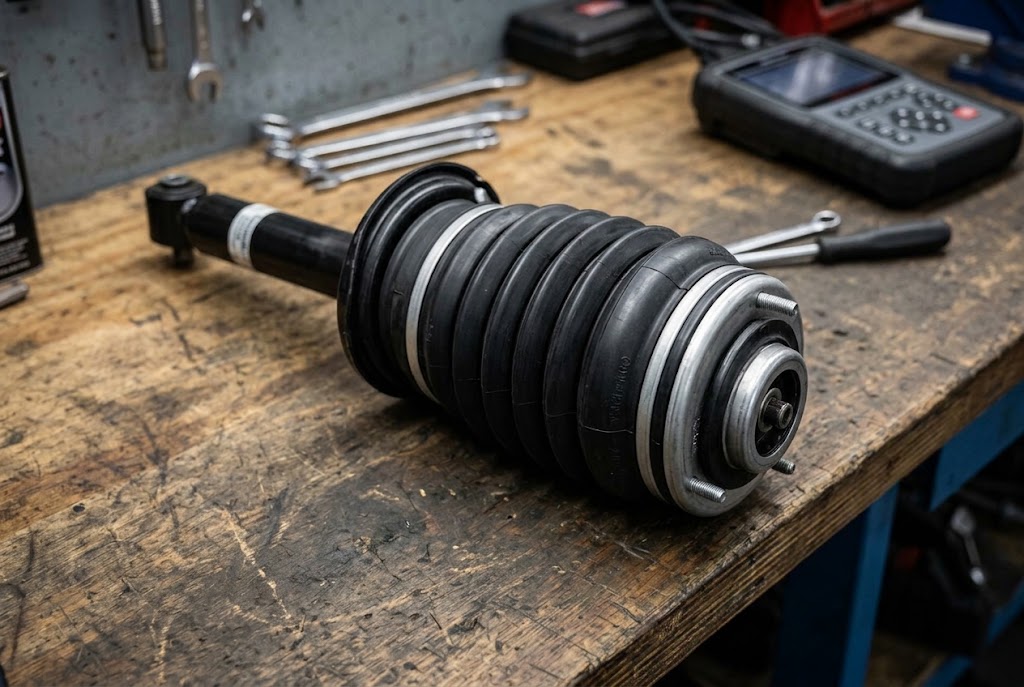
Symptom: one corner low after parking, the compressor running longer than usual, a suspension warning. When: buyer's guides advise budgeting for it above roughly 70,000 miles; age and heat matter as much. Repair: find the leak (strut, air line or valve block), replace the leaking strut, check the compressor and relay. Remanufactured struts exist for all three generations. In Dubai, summer pressure swings can trigger a warning on a healthy system.
2. Cooling system leaks
Symptom: a sweet smell after driving, pink crust around hose joints, a low-coolant warning, or the temperature creeping up in traffic. When: one US specialist sees these cluster around 60,000 miles; early cars' original radiators are at the end of their life. Repair: pressure-test, then replace the radiator, brittle plastic fittings, hoses or water pump as found. Some early third-generation cars were also recalled (Bentley RE23/02) for the climate system's coolant pump. Dubai traffic with the AC on full is this system's hardest test.
3. Ignition coils and misfires
Symptom: uneven idle, a stumble under hard acceleration, a flashing engine light. When: any mileage; owners on forums link the worst of it to 2004–2006 W12 cars, but coils still fail later. Repair: confirm the cylinder by swapping coils, then replace the failed coil. Many specialists fit a full set with new plugs. One point where advice online conflicts: some guides say the W12 has 48 spark plugs. It has 12; 48 is the valve count.
4. Brakes, rear calipers and parking brake
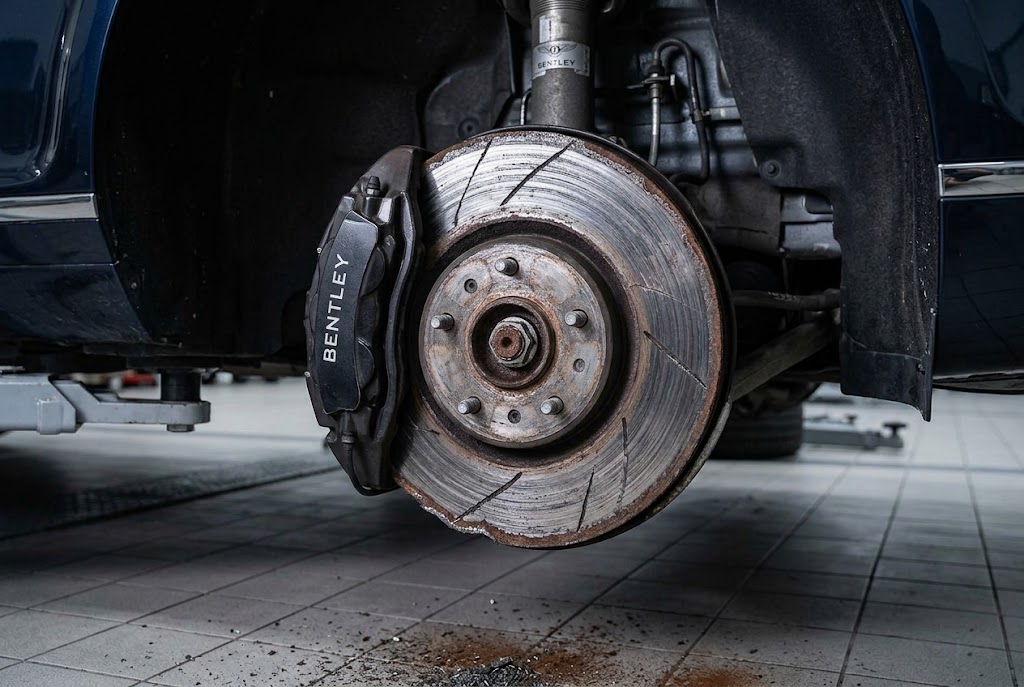
Symptom: grinding, a pulsing pedal, a pull to one side, or a parking-brake warning. When: wear-driven; a 2.4-tonne car eats pads and discs, and UK owners report rear caliper pistons seizing on older cars. Repair: pads and discs, freeing or replacing the rear calipers, and the parking-brake motor if it has failed. Heavy stop-start driving in Dubai shortens the intervals.
5. Battery drain and electrical faults
Symptom: random warning lights after the car has stood, slow cranking, windows misbehaving, or a flat car after a summer away. When: age-driven; UAE battery suppliers commonly quote two to three years of life here, against four to five in milder climates. Repair: test the battery and charging, fit and register a new battery, check for drains. UK owners also report blocked AC drains soaking the passenger-footwell relay box on first-generation cars.
Leaving the car for the summer? Connect a battery conditioner before you travel. Continental GTs are known to drain the battery when unused for more than a week, and low voltage causes many false warnings.
Continental GT repair costs: caught early vs left too long
We found no reputable, current published Dubai price range for these jobs, so we don't print one. Instead, here is how much each bill grows when the fault is left, biggest gap first.
| Fault | Cost if caught early | Cost if ignored | Gap |
|---|---|---|---|
| Cooling leak | Low to moderate: a hose, fitting, radiator or pump | Very high: overheating can damage the head gaskets, and on the W12 that means the engine comes out | Largest |
| Air suspension leak | Moderate: one strut or air line | High: a compressor that runs non-stop burns out, adding compressor and valve block to the strut | Large |
| Misfire | Low: one coil, or a set with plugs | High: unburnt fuel overheats the catalytic converters | Large |
| Brakes | Moderate: pads and discs | Moderate to high: seized caliper, scored discs, parking-brake motor | Medium |
| Battery and electrics | Low: test and new battery | Usually moderate; very high if water reaches the relay box and damages the starter, an engine-out job on the W12 | Medium |
Estimate: labour drives the big bills. Assuming a first-generation W12, owners report a full plug-and-coil change takes two to three hours, so that job stays small. Engine-out work (head gaskets, starter motor) is where costs jump. Parts choice is the other lever: genuine, remanufactured and used struts differ widely in price.
Which Continental GT faults can wait and which can't
For most owners, we'd treat heat, brakes or a flashing engine light as stop-now faults, and everything else as book-this-week.
| What you notice | What to do now |
|---|---|
| Temperature rising, steam or a coolant warning | Pull over, switch off, don't open the hot cap. Have the car recovered. |
| Flashing engine light or heavy misfire | Stop using boost, drive gently to a safe spot and have it recovered. |
| Brake warning, grinding or a pull | Stop driving and have it recovered. |
| A corner on its bump stop, or the tyre rubbing | Don't drive. Recovery only. |
| One corner slightly low after parking, no warning | Book within the week before the compressor wears. |
| Warnings after the car has stood | Charge or test the battery first, then scan the codes. |
| Steady amber engine light, car running smoothly | Book a diagnostic within a week or two. |
Continental GT reliability questions owners ask
Which Bentley Continental GT generation is the most reliable?
For a used buy, we'd pick a later second-generation V8 or V8 S (2012–2018). It avoids the W12's tight packaging and costlier servicing, and UK reviewers have long recommended the V8 S. Third-generation cars (2018–2024) have fewer age-related faults, but check the coolant pump recall on early builds. First-generation cars can be good with the fullest service history.
How much should I budget per year for a Continental GT in Dubai?
US ownership studies put routine maintenance at roughly USD 1,800 to 2,500 a year, before any faults. Assuming an out-of-warranty car, we'd keep a separate repair fund big enough to cover one axle of air suspension in any year, and plan on a new battery every two to three years in UAE heat. Contact us for a current quote.
How do I check whether the coolant pump recall was done on my GT?
The recall (Bentley RE23/02) covers certain early third-generation cars built between mid-2018 and mid-2020. Any Bentley dealer can check by chassis number whether it has been completed, and recall work is free.
Is it safe to drive with the air suspension warning on?
If the car sits level and handles normally, a short, gentle drive to the workshop is usually fine; in summer the warning can come from heat-related pressure changes. If a corner is on its bump stop, a tyre rubs or the compressor runs constantly, don't drive it.
Got one of these five Continental GT faults?
Send us the symptom and mileage on WhatsApp and we'll tell you whether it can wait, with free pickup and drop-off anywhere in Dubai.